
There was only one attraction on our itinerary today. The Fayette Historic Townsite, founded in 1867, was the home of Jackson Iron Company for 24 years. It was one of the UP’s most productive iron-smelting operations.
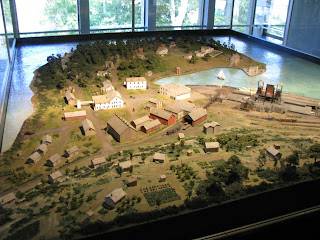 At the town’s peak, there were 500 residents and the smelting operation produced 229,288 tons of iron during the 24 years it operated. The site had two furnaces that stood side by side and over 900 feet of docks in Snail Shell Harbor.
The town was constructed on this site in order for it to be close to the limestone (now cliffs along the water) and large amounts of hardwood, both necessary to process the iron ore into pig iron.
 There are 19 buildings remaining from the town. These include the blast furnaces, hotel, machine shop, company store, company office, town hall,
doctor’s home, superintendent’s home, several middle class homes, a kiln (originally there were eight),
 and a newly reconstructed laborer’s cabin. The site is a true work in progress. Those buildings that are open allow a self-guided tour. There are informative plaques, and areas enclosed by Plexiglas shields displaying furnishings, and building construction. Interactive devices also provide additional documentation. Life for most people in this town was dirty, filthy, and dangerous. The one saving grace was the schoolhouse was built far from all the noise and dirt. It was a brief haven for the children who were allowed to attend school.
  When we left the Townsite we drove to Fairport, a still operating fishing village. The photo is of part of the fishing fleet that operates from the Fairport Harbor.
  Tomorrow we will be crossing back into the lower part of Michigan. This means another trip across the Mackinac Bridge.
No comments:
Post a Comment